

- This event has passed.
Juhani Aaltonen Anniversary Concert
18.11.2025 @ 19:00 - 21:00
Savoy Theatre
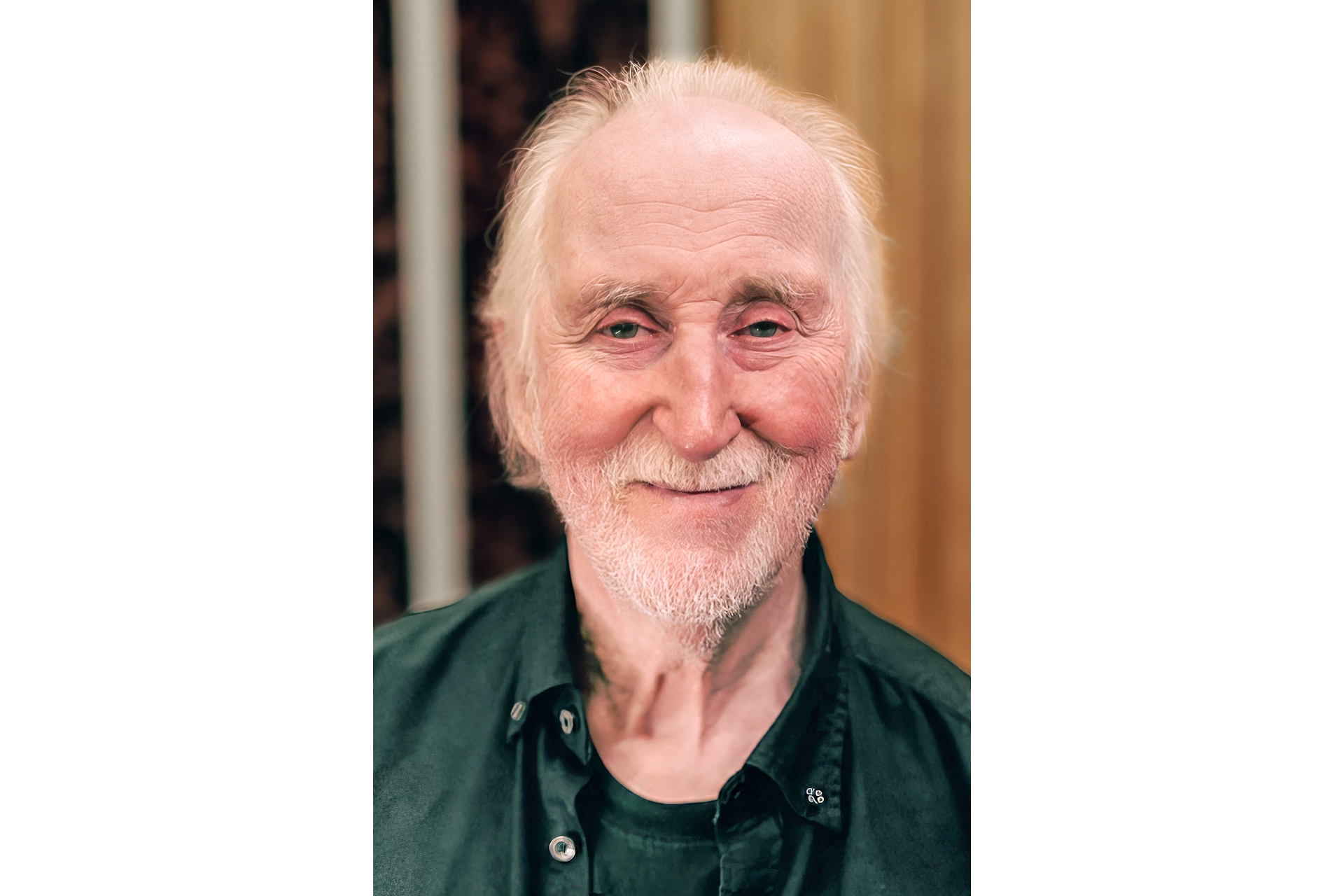
The concert celebrates not only the nine decades of the Grand Old Man of Finnish modern jazz, Juhani Aaltonen (b. 12 December 1935), but also his nearly 70-year-long and still ongoing career as a musician, composer, and bandleader.
Aaltonen’s journey as a wind instrumentalist began in the 1950s while he was working in Sweden as a farmhand on the same farm where he had been sent as a war child a little over a decade earlier. Aaltonen became interested in jazz after attending a few concerts in the local People’s Park and bought his first instrument, an old clarinet, from a local music shop. Since the clarinet was badly cracked, he traded it for a tenor saxophone, which he learned to play with the help of a small instruction booklet that came with its case. After returning home to Inkeroinen, Aaltonen made music with other local youngsters, but he soon gave up the idea of pursuing a career as a musician, sold his saxophone, and once again left in the late 1950s for Sweden—this time to work in a pulp mill, escaping Finland’s difficult economic situation.
Aaltonen’s professional career truly began after he returned to Finland and joined the band of the respected Kotka-born trumpeter Heikki Rosendahl, in which he played baritone saxophone and flute at the turn of the 1950s and 1960s. Through this ensemble, Aaltonen started to gain national recognition. Soon after, encouraged by another saxophonist/flautist from Kymenlaakso, Esa Pethman, he moved to Helsinki and applied to the Sibelius Academy with flute as his main instrument. His sweetheart Riitta also moved from Inkeroinen to Helsinki and has remained his partner and supporter throughout his career.
Aaltonen’s academic path, however, proved too restrictive and lasted only for the academic year 1961–62, after which he left it behind and began working as a freelance musician, playing for example in Annikki Tähti’s band. Apart from that one year at the Sibelius Academy and a fall semester about a decade later at the Berklee School of Music—interrupted this time for family reasons—Aaltonen has been entirely self-taught.
Word of the talented multi-instrumentalist soon spread in Helsinki’s music circles—although when he first arrived in the capital Aaltonen mainly played alto saxophone and flute, he would quickly become known above all as a tenor saxophonist. From there, he embarked on his career as a studio musician, which continued well into the 1980s. During those years, Aaltonen may have taken part in more recordings than any other Finnish musician.
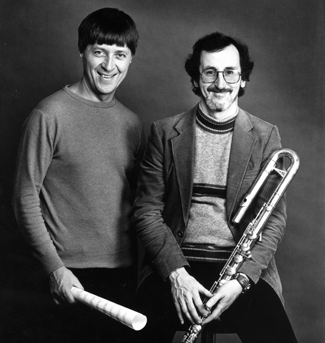
Alongside his studio work, Aaltonen quickly established himself as one of the key figures in the small circle of musicians who began creating a new Finnish modern jazz in the early 1960s. Aaltonen’s first jazz recording was The Modern Sound of Finland, recorded in 1964 with Esa Pethman’s ensemble, which is often regarded as the very first Finnish modern jazz recording. Soon, Aaltonen also formed close collaborations with three of the most important colleagues in his career: Henrik Otto Donner, Heikki Sarmanto, and Edward Vesala, all of whom in turn sought to work with him. Eero Koivistoinen was likewise a significant partner for several years. From the late 1960s onward, projects with these musicians led to central Finnish modern jazz recordings of the era, such as Flowers in the Moon, Counterbalance, Like a Fragonard, and Everything Is It with Heikki Sarmanto; En Soisi Sen Päättyvän and Strings with Otto Donner; Nykysuomalaista, Nana, Hot Lotta, Nan Mandol, Rodina, and Satu with Edward Vesala; as well as Odysseus and Wahoo! with Eero Koivistoinen. His collaboration with Edward Vesala also resulted in Aaltonen’s first albums under his own name: Etiquette (1974), Springbird (1976), and Prana (1981).
In addition to studio work and various small groups, Aaltonen was also one of the founding members of the UMO Jazz Orchestra (Uuden Musiikin Orkesteri) in 1975 and participated in its activities for over a decade, until in 1986 he was awarded a 15-year artist’s grant and stepped down from its permanent line-up.
Aaltonen was also active in collaborations with Nordic jazz musicians. His participation in the Nordic All Stars ensemble in the early 1970s and in the Scandinavian Jazzensemble in the early 1980s led, among other things, to Aaltonen joining bassist Arild Andersen’s quartet. The group’s well-received albums (Green Shading into Blue and Shimri), released in the late 1970s, helped elevate his international status.
In the 1980s, Aaltonen experienced a religious awakening and increasingly devoted himself both to sacred music and the related community activities, although his collaborations—particularly with Heikki Sarmanto but also with Henrik Otto Donner and, for example, Jukka Linkola—continued.
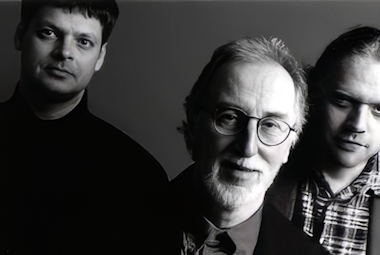
By the turn of the millennium, Aaltonen believed he had already retired from performing modern jazz, but several younger-generation musicians felt otherwise. First, Antti Hytti and Jone Takamäki invited him to join the ensemble Suhkan Uhka (Suhka, 2002), and then the group’s bassist and drummer, Ulf Krokfors and Tom Nekljudow, persuaded Aaltonen to form a trio with them. The live recording Mother Tongue (2002) by the Juhani Aaltonen Trio was both an artistic triumph and the winner of that year’s Jazz Emma Award. Thus, retirement was set aside, and this activity sparked a true renaissance in Aaltonen’s career, with numerous performances and recordings by the Juhani Aaltonen Trio (later with Reino Laine on drums), the Juhani Aaltonen Quartet (with Iro Haarla on piano added to the trio), Nordic Trinity (with Mikko Iivanainen and Klaus Suonsaari), and many other ensembles.
The anniversary concert now being held spans the entire arc of Juhani Aaltonen’s career, even though many long-time collaborators are no longer with us. Of course, it prominently features Heikki Sarmanto, with whom Aaltonen has performed and recorded actively for over six decades; Reino Laine, whom Aaltonen first met at the legendary Kurvi rehearsal space in Helsinki in the early 1960s, shortly after his move to the capital; Iro Haarla, who participated in several late-1970s and early-1980s projects with Aaltonen and Edward Vesala; Raoul Björkenheim and Ulf Krokfors, who have taken part in many of Aaltonen’s projects in the new millennium; as well as the young members of PLOP. Also Raoul Björkenheim will play.
Presentation photo: Jori Grönroos
Concert is organised in co-operation with Savoy theatre.
Concert duration approx. 2 hours, includes intermission
Floor K18 drinking area. Balcony no age limit, no drinking
Matti Nives’s article in Finnish Music Quarterly’s publication about Junnu